Tôi không ăn thịt.
Approx. pronunciation: toy khom un thit
I do not eat meat.
Ask clearly and confirm directly.
Learn direct questions for ingredients and preparation, with care around allergies and cross-contact.
Start the lesson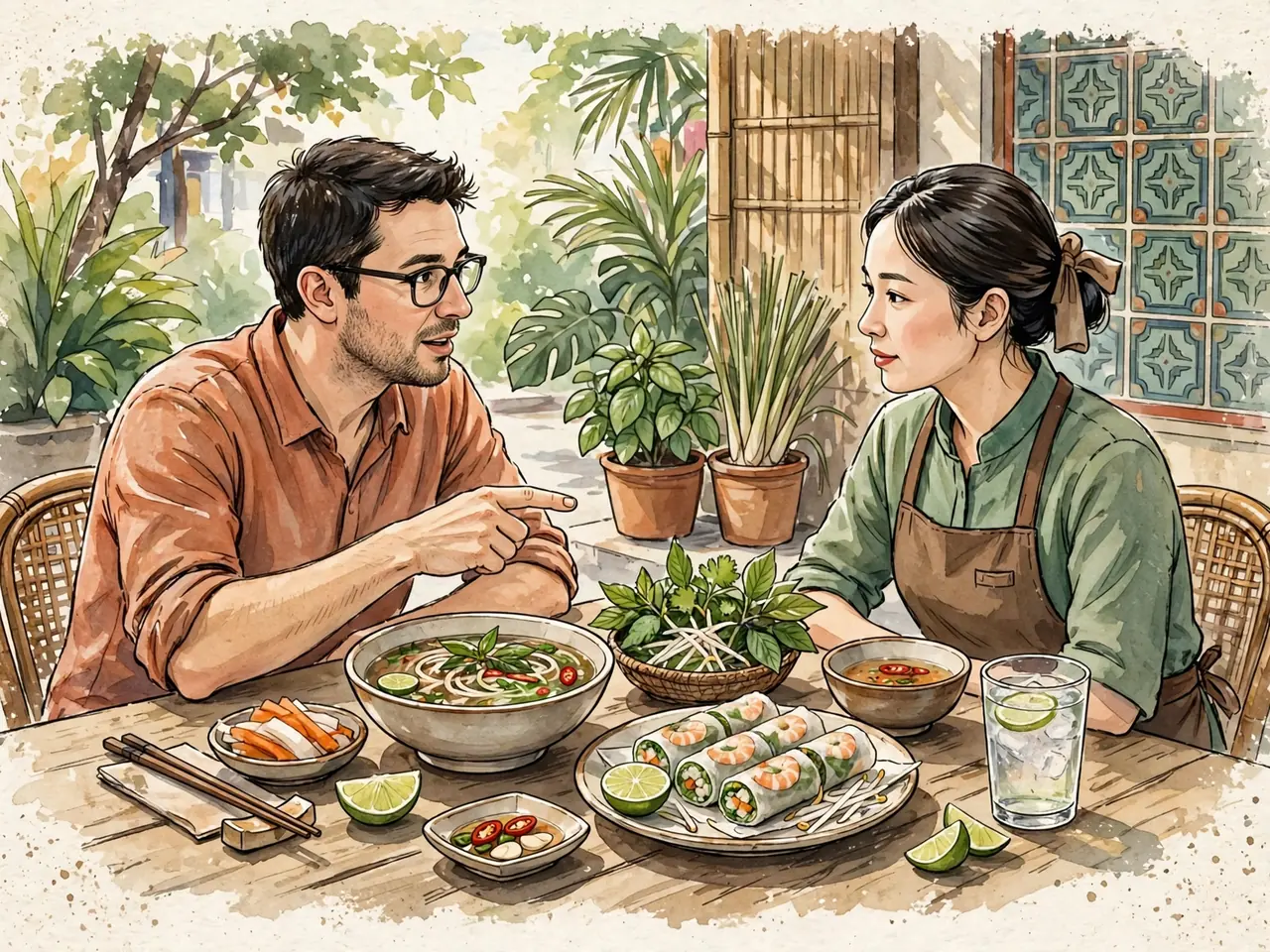
A translated phrase can help you ask, but it cannot make a safety decision for you.
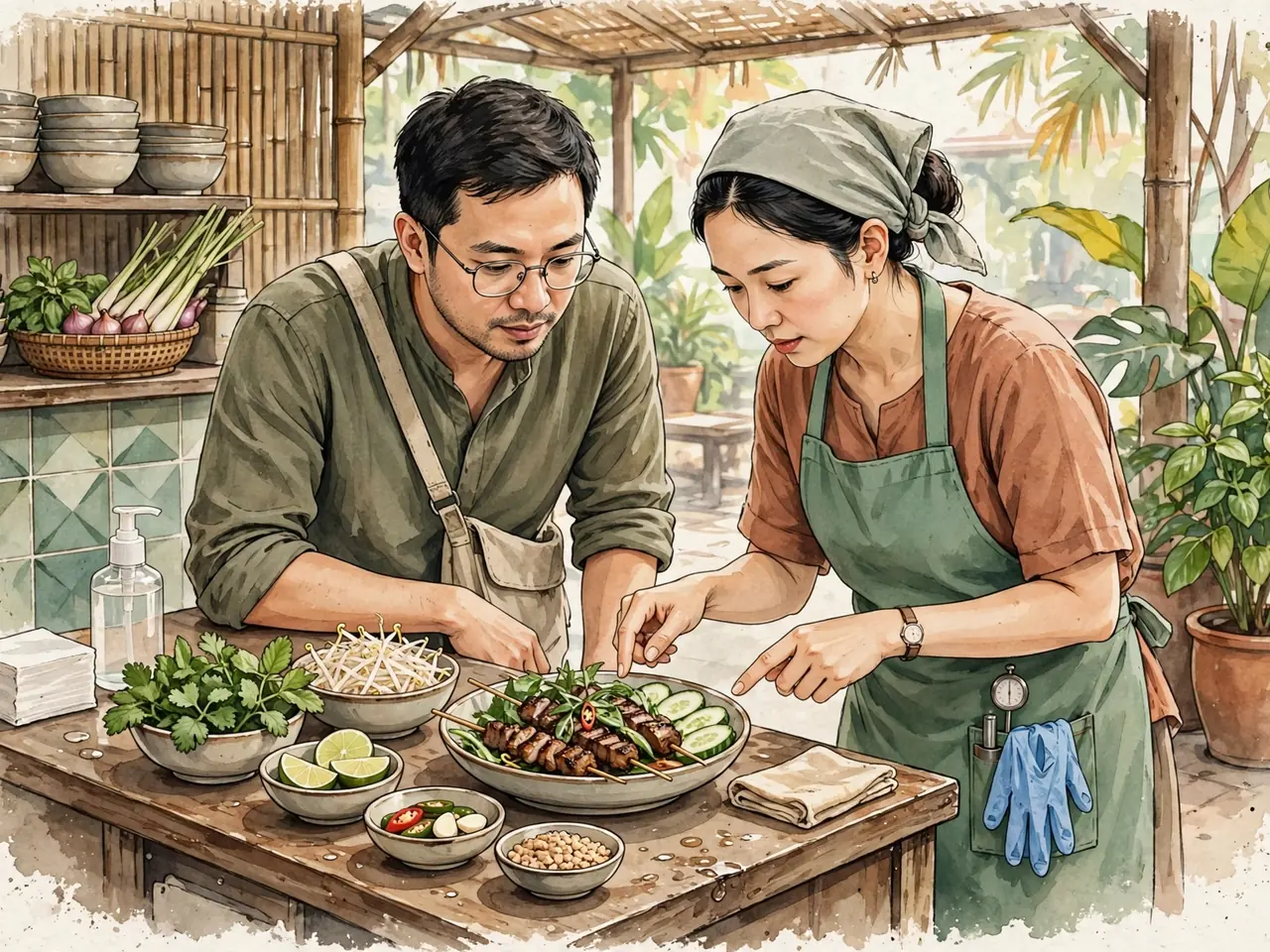
Explain the ingredient or restriction clearly before ordering, then wait for the staff member to answer. If the answer is uncertain, ask someone who can confirm the recipe and preparation or choose not to order that dish.
For an allergy or a medically necessary restriction, these phrases do not guarantee that food is safe. Ingredients and possible cross-contact must be confirmed directly with the restaurant or vendor before eating.
Use a direct sentence and give the other person time to respond.
Tôi không ăn thịt.
Approx. pronunciation: toy khom un thit
I do not eat meat.
Tôi ăn chay.
Approx. pronunciation: toy un chai
I eat vegetarian food.
Tôi bị dị ứng với đậu phộng.
Approx. pronunciation: toy bee zee ung voy dow fong
I am allergic to peanuts.
Specific questions are more useful than assuming a dish is suitable.
Món này có đậu phộng không ạ?
Approx. pronunciation: mon nay kaw dow fong khom ah
Does this dish contain peanuts?
Món này có dùng nước mắm không ạ?
Approx. pronunciation: mon nay kaw zoong nuhk mum khom ah
Does this dish use fish sauce?
Có dùng chung chảo hoặc dầu chiên không ạ?
Approx. pronunciation: kaw zoong joong chow hawk zow chien khom ah
Do you use the same pan or frying oil?
Dietary words can be understood differently, so keep checking the details.
“Ăn chay” is a useful way to say you eat vegetarian food, but it does not specify every ingredient or preparation method. Explain the ingredients you must avoid and ask about sauces, stock, garnishes, and shared equipment when those details matter.
Do not rely on a phrase card, a menu label, or a reassuring guess as proof of safety. Ask the staff to confirm the actual ingredients and cross-contact risk directly, and leave the dish if they cannot do so clearly.
This example shows a clear question and a safe response when the dish is unsuitable.
You Tôi bị dị ứng với đậu phộng. Món này có đậu phộng hoặc dùng chung chảo không ạ? I am allergic to peanuts. Does this dish contain peanuts or use the same pan?
Server Món này có đậu phộng và dùng chung chảo. Bạn có muốn xem món khác không? This dish contains peanuts and uses the same pan. Would you like to see another dish?
You Vâng, cho tôi xem món không có đậu phộng ạ. Yes, please show me a dish without peanuts.
It is fine to pause or decline when the details are not clear.
If you need more time, say “Tôi cần hỏi kỹ hơn ạ” — “I need to ask more carefully.” If the answer remains uncertain, “Vậy tôi không dùng món này ạ” means “Then I will not have this dish.”
For serious allergies, carry any additional written information or emergency plan you normally use. Vietnamese phrases support the conversation; they do not replace direct confirmation from the food provider or medical advice.