Cho tôi xem thực đơn được không ạ?
Approx. pronunciation: chaw toy sem thuk dun duhk khom ah
Could I see the menu, please?
A simple, polite Vietnamese flow to get a menu, place your order, and check the details.
Start the guide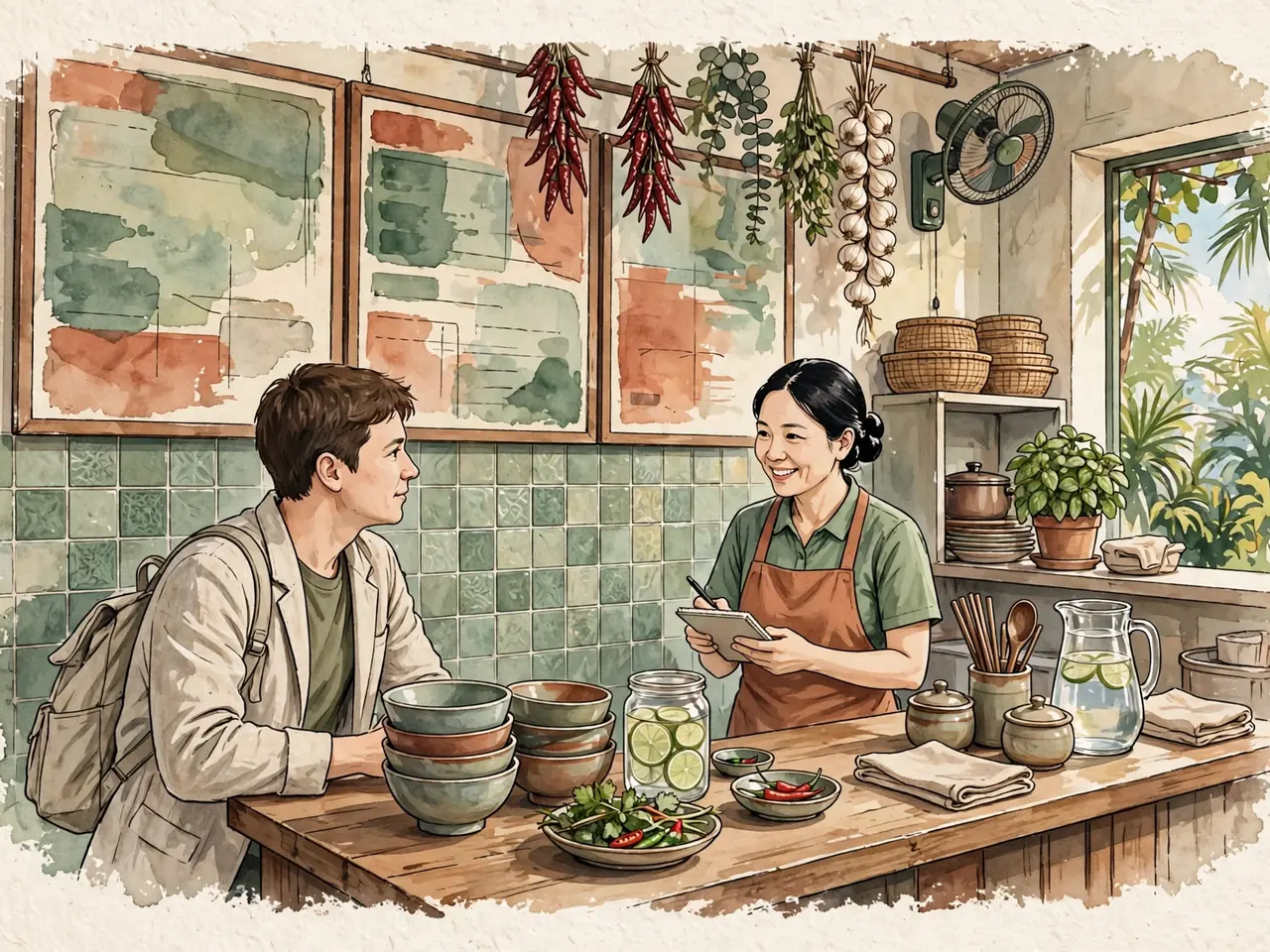
Phonetic hints are rough English-friendly cues, not IPA. Use audio and the written Vietnamese alongside them.
A few small steps can make a restaurant interaction feel more natural.
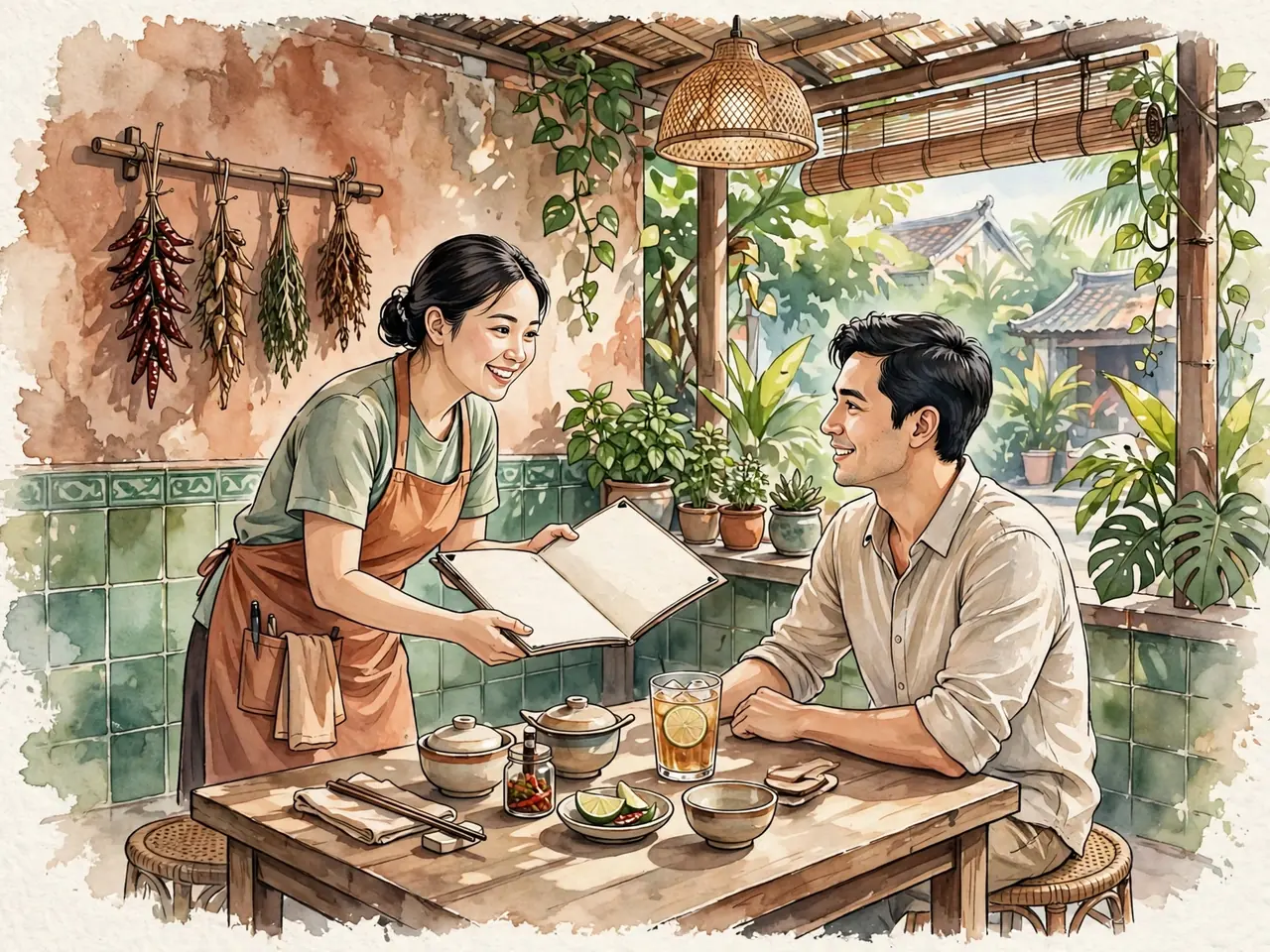
Start with a greeting or a polite request for attention, look over the menu, and point to a dish if you are unsure of its name. Then say what you would like and ask any important follow-up question.
The word “ạ” at the end of a request adds a respectful tone. It is especially useful when speaking with a server or someone you have just met.
Use these phrases to catch the server’s eye and get the menu.
Cho tôi xem thực đơn được không ạ?
Approx. pronunciation: chaw toy sem thuk dun duhk khom ah
Could I see the menu, please?
Cho tôi gọi món ạ.
Approx. pronunciation: chaw toy goy mon ah
I would like to order.
Cho tôi món này ạ.
Approx. pronunciation: chaw toy mon nay ah
I will have this dish, please.
Pointing and adding one detail in Vietnamese can prevent a mix-up.
Cho tôi một phần ạ.
Approx. pronunciation: chaw toy moht fun ah
One serving, please.
Không cay nhé.
Approx. pronunciation: khom kai nyeh
Not spicy, please.
Cho tôi thêm nước lọc được không ạ?
Approx. pronunciation: chaw toy them nuhk lawk duhk khom ah
Could I have some more water, please?
A quick confirmation is useful when the restaurant is busy.
If you ordered by pointing, repeat the number of portions or the requested change when the server confirms it. “Đúng rồi” means “That is right,” while “Không phải” means “That is not it.”
If you need to change an order, ask promptly and politely. Once the food arrives, compare it with what you requested rather than assuming a small difference is intentional.
Adapt this short exchange to almost any menu.
You Cho tôi gọi món ạ. Cho tôi món này và một phần ạ. I would like to order. I will have this dish, one serving, please.
Server Bạn có muốn thêm nước không? Would you like some water as well?
You Có, cho tôi một chai nước lọc ạ. Yes, one bottle of water, please.
The same calm tone works when you are ready to pay.
To ask for the bill, say “Tính tiền giúp tôi với ạ.” You can also say “Cho tôi thanh toán ạ” when you would like to pay. “Cảm ơn” is a natural way to thank the server or vendor.
Keep “ạ” as a useful politeness marker, not a word that needs a literal translation every time. Your tone and a friendly expression matter too.

Learn the phrases to order, customize, pay, and say thanks at any cafe.
Direct Vietnamese questions about ingredients and preparation, with extra care for allergies.
Vietnamese menu words and questions to understand dishes, portions, and prices.
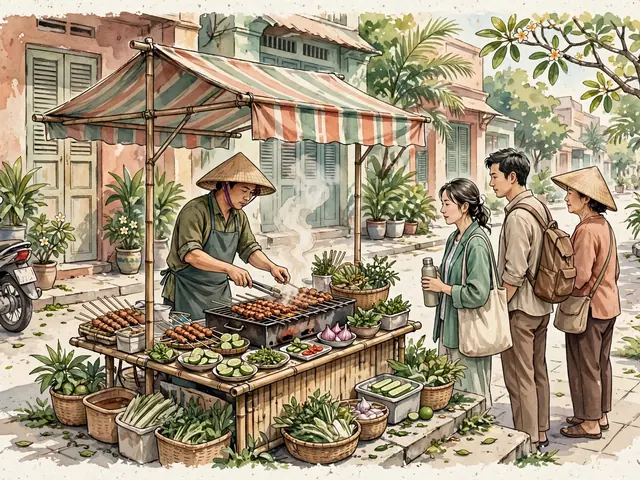
Vietnamese phrases to choose, order, and enjoy street food at a busy stall.