Xin chào ạ.
Approx. pronunciation: sin chow ah
Hello. (polite)
A practical guide for your first journey.
Use a small, useful set of phrases to make decisions, ask for help, and connect with people from arrival to your last meal.
Start the guide
You do not need a large vocabulary to make your first choices clearly.
On a first trip, language is most useful at the moment a decision appears: choosing the right pickup point, confirming a hotel booking, asking where to get off, or checking what is in a dish. Learn the sentence that helps with that decision, rather than memorising an isolated list of tourist phrases.
Use tôi for “I” and pair it with a polite question. Vietnamese uses relationship words such as anh, chị, cô, and chú, so you may hear people address one another with those words instead of a name. If you are unsure, a friendly greeting followed by a clear request is better than forcing a familiar form of address.
Expect variation in pronunciation between regions and between individuals. Clear tones are helpful, but a patient listener can usually work with a careful attempt. Pointing to a booking, map, or menu while you speak is a useful part of communication, not a failure of it.
A greeting and a thank-you open most small interactions on the road.
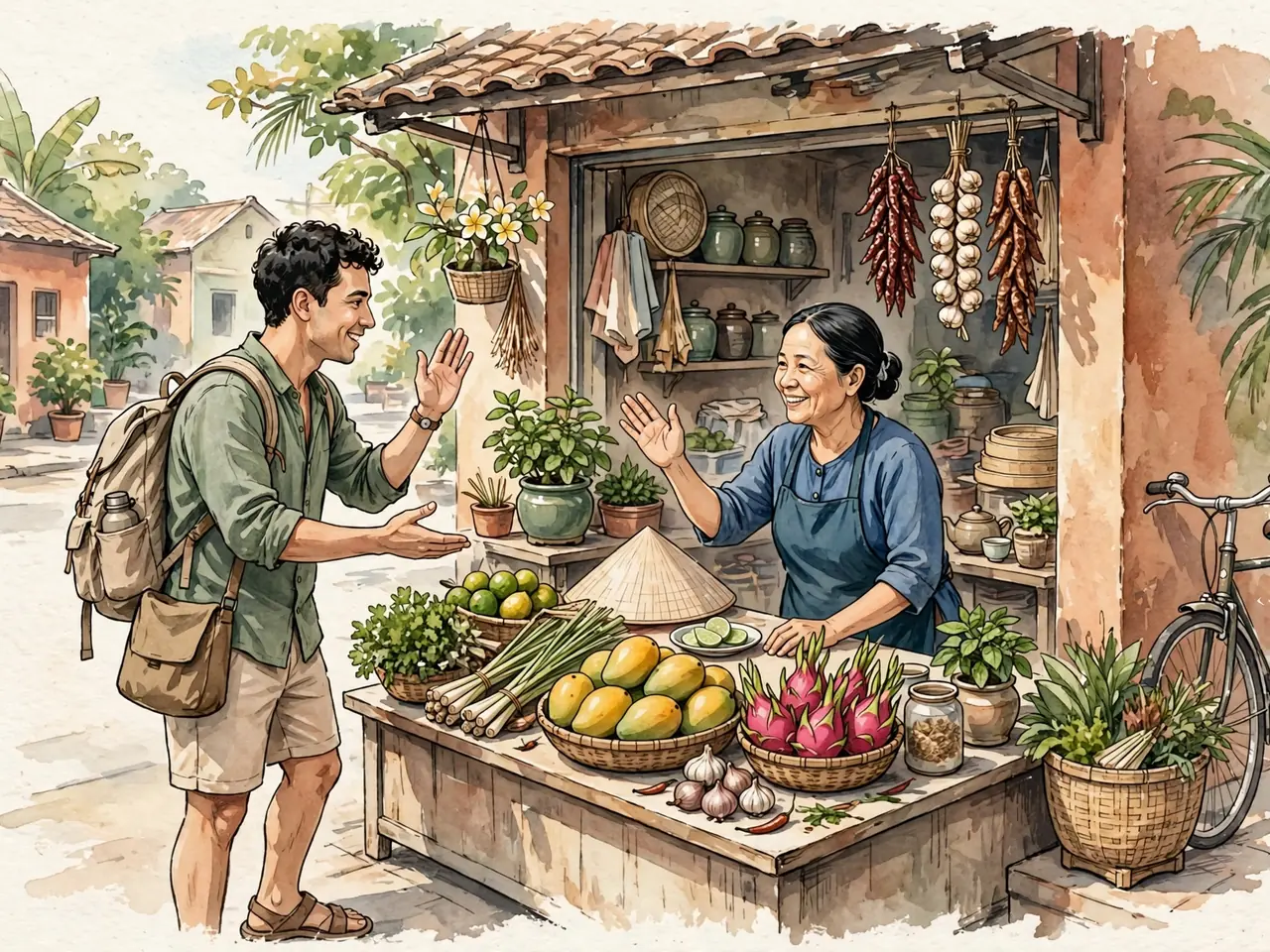
Xin chào ạ.
Approx. pronunciation: sin chow ah
Hello. (polite)
Chào bạn.
Approx. pronunciation: chow ban
Hi. (friendly, often to a similar-age person)
Cảm ơn.
Approx. pronunciation: gahm uhn
Thank you.
Xin lỗi, cho tôi hỏi...
Approx. pronunciation: sin loy, chaw toy hoy
Excuse me, may I ask...?
At a hotel, short confirmation questions help both sides avoid guessing.
You Xin chào, tôi có đặt phòng dưới tên Taylor. Hello, I have a reservation under the name Taylor.
Staff Quý khách cho tôi xem hộ chiếu được không ạ? Could you show me your passport, please?
You Đây ạ. Tôi có thể nhận phòng chưa ạ? Here it is. Can I check in now?
Staff Được ạ. Đây là chìa khóa phòng của quý khách ạ. Yes. This is your key.
You Cảm ơn. Phòng ở tầng mấy ạ? Thank you. Which floor is the room on?
Ask for a location, a route, or a clear drop-off point before the vehicle starts moving.
Địa chỉ này ở đâu ạ?
Approx. pronunciation: dee uh chee nay uh dow ah
Where is this address?
Cho tôi xuống ở đây nhé.
Approx. pronunciation: chaw toy soo-ung uh day nyeh
Please let me off here.
Đi thẳng rồi rẽ trái.
Approx. pronunciation: dee tahng roy zeh try
Go straight, then turn left.
Bạn có thể chỉ giúp tôi trên bản đồ được không?
Approx. pronunciation: ban kaw thay chee zoop toy tren ban doh du-uk khom
Could you show me on the map?
Make the order fit you, then confirm the detail that matters most.
A simple pattern is cho tôi, “for me, please,” followed by the item. You can then add a preference: Cho tôi món này, “I will have this dish,” or Cho tôi một ly nước, “a glass of water, please.” Adding ạ at the end can make a request sound more deferential; your tone and a calm delivery matter too.
For spice, try Tôi ăn được cay, nhưng xin ít thôi, meaning “I can eat spicy food, but just a little, please.” To name an ingredient, say Không hành, không rau mùi, “no onion, no cilantro.” If an ingredient is important to your health, show the written Vietnamese or ask a trusted local speaker to help you explain it clearly rather than relying on a short phrase alone.
You may hear bát or tô for a bowl depending on region and context. If a word is unfamiliar, point to the menu and ask Món này là gì ạ?, “What is this dish?” Curiosity gives the person serving you a clear chance to explain.
These lines keep a small misunderstanding from becoming a stressful one.
You Xin lỗi, tôi bị lạc. Bạn có thể giúp tôi không? Excuse me, I am lost. Can you help me?
Local helper Bạn muốn đi đâu? Where do you want to go?
You Tôi muốn đến địa chỉ này. I want to go to this address.
You Bạn nói chậm hơn được không? Could you speak more slowly?
Local helper Được, tôi viết cho bạn nhé. Sure, I will write it down for you.
A few small habits make your meaning easier to receive.
Start with xin lỗi when you need someone’s attention, even when you are not apologising for a mistake. It can work like “excuse me.” Use cảm ơn after help, and add nhé or ạ only when it suits the situation: nhé can make a request feel gentle and collaborative, while ạ often signals respectful politeness. Neither word is a magic ending for every sentence.
If you cannot hear a tone or word, say Tôi đang học tiếng Việt, “I am learning Vietnamese,” then ask Bạn nói lại được không?, “Could you say that again?” Listen for the answer and repeat the key place name, dish, or number back to confirm it. That habit is more reliable than pretending you understood.
Before each outing, choose three phrases for one decision: one greeting, one request, and one repair line. Use them repeatedly that day. A small phrase you actually say is more valuable than a large phrase list that stays in your notes.