Xin phép ạ.
Approx. pronunciation: sin phep ah
Excuse me / may I? (polite)
Good manners begin with attention.
Use a practical checklist as a starting point, then let each person and setting refine it.
Build your confidence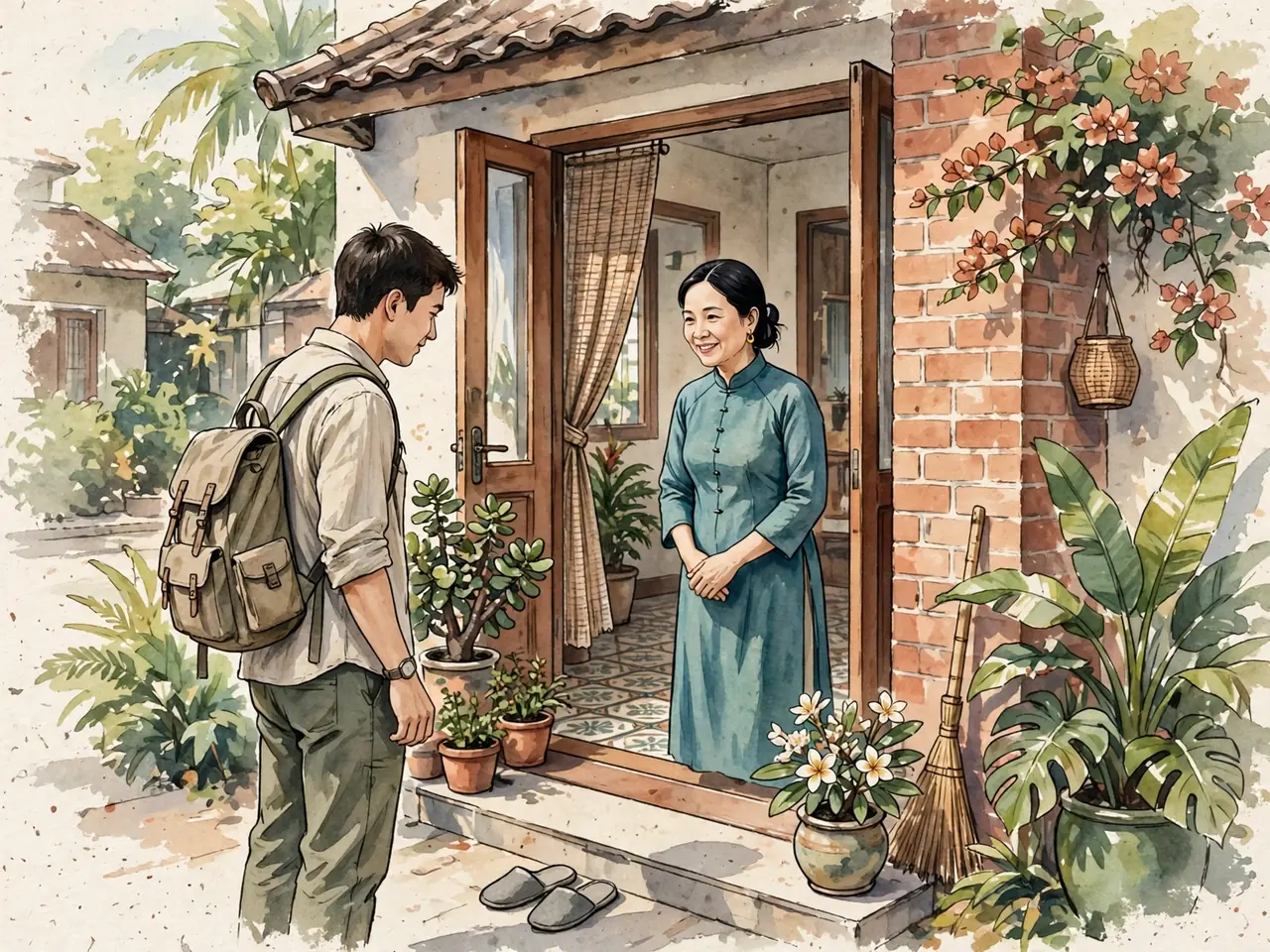
A short list can prepare you, but Vietnamese culture is not one fixed script.
Do greet people, show appreciation, listen for preferred forms of address, and ask before entering a private space or taking a photo. Do not assume that a custom from one family, region, age group, or online story applies everywhere.
The most reliable habit is to notice the people around you. If the setting feels formal, slow down and use more careful language; if a friend makes the exchange casual, follow their lead without forcing familiarity.
These phrases give you a respectful way to enter a conversation or request without sounding over-rehearsed.
Xin phép ạ.
Approx. pronunciation: sin phep ah
Excuse me / may I? (polite)
Mình hỏi một chút được không ạ?
Approx. pronunciation: min hoy mot choot duoc khom ah
May I ask something? (polite)
Cảm ơn bạn đã giúp mình.
Approx. pronunciation: gahm uhn ban da zoop min
Thank you for helping me.
Watching the room is not passivity; it is a way to respect its existing rhythm.
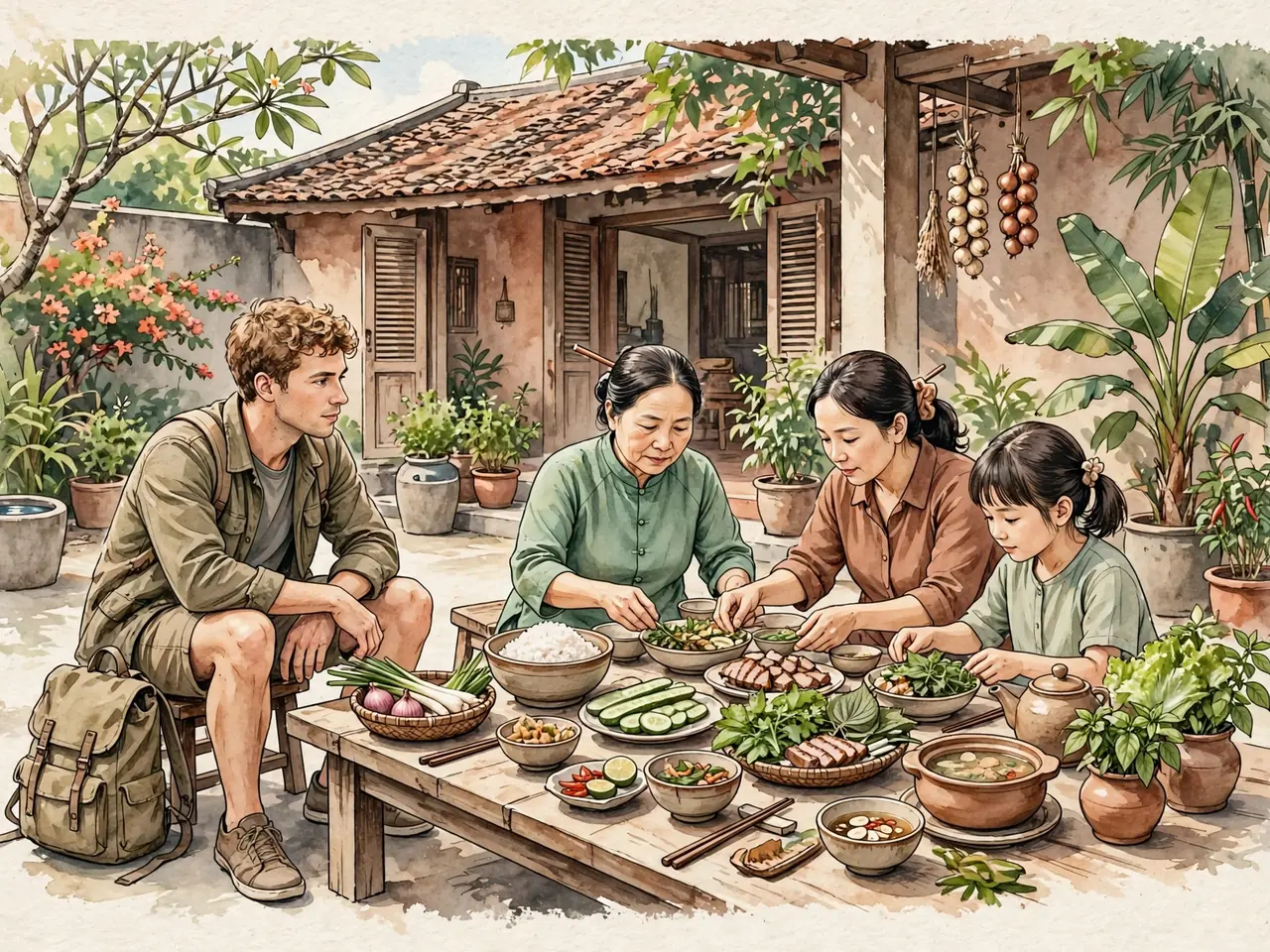
At a meal, notice how people share food and address one another. In a home, wait for a cue before moving into a private room. In conversation, listen for whether a person prefers their name, a title, or a relationship word.
Do not turn observation into a performance of “Vietnamese behavior”. Join naturally, keep your questions specific, and accept that people may have different habits from the examples you studied.
A brief acknowledgement keeps a small mistake from becoming an argument about the rule.
You Chào cô ạ. Hello. (a cautious first guess)
Acquaintance Bạn cứ gọi mình là Lan nhé. Just call me Lan.
You Dạ, xin lỗi bạn. Mình gọi bạn là Lan nhé. Sorry. I’ll call you Lan.
Clear, humble language helps you recover when you miss a word or make the wrong assumption.
Xin lỗi, mình chưa hiểu.
Approx. pronunciation: sin loy min chuh hyeu
Sorry, I do not understand yet.
Bạn nói lại giúp mình được không?
Approx. pronunciation: ban noy lie zoop min duoc khom
Could you say that again?
Bạn chỉ giúp mình với ạ.
Approx. pronunciation: ban chee zoop min voy ah
Could you show or explain it to me? (polite)
Respect is not the same as avoiding every unfamiliar choice.
Do not assume someone’s age, gender, family role, religion, diet, income, or regional identity from appearance or a single custom. Do not insist that a person eat, drink, speak, or explain a tradition to prove authenticity.
If you make a mistake, apologise briefly, listen to the answer, and change your behavior. That combination of humility and follow-through is more useful than memorising a list of prohibitions detached from context.