Mời mọi người ăn cơm ạ.
Approx. pronunciation: moy moy ngoo-ee an guhm ah
Please enjoy the meal, everyone. (polite)
Share the table with confidence.
Learn what to say and what to notice when a meal brings people together around shared dishes.
Join the meal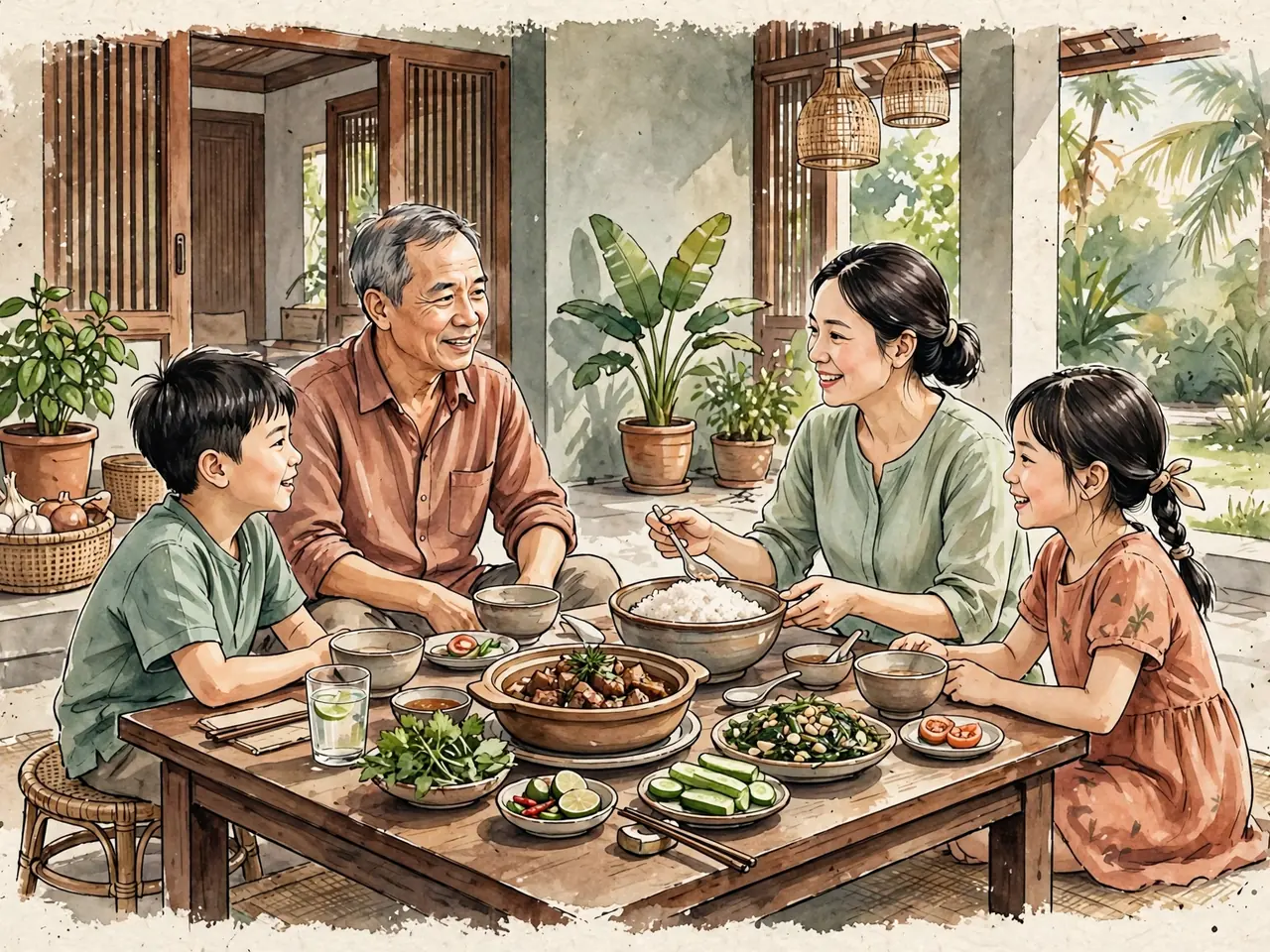
A family lunch, a street-food stop, and a formal dinner may have different rhythms.
Many Vietnamese meals are shared, with dishes in the middle and rice or soup alongside them, but serving styles and expectations vary between households and restaurants. Watch the host and nearby diners before deciding what to do.
In some homes, it is considerate to wait for an older diner or the host to begin; in other settings, people may simply start when food arrives. Asking or following the table is more reliable than treating one custom as universal.
“Mời” can mark a courteous invitation to eat, not only a formal offer of food.
Mời mọi người ăn cơm ạ.
Approx. pronunciation: moy moy ngoo-ee an guhm ah
Please enjoy the meal, everyone. (polite)
Mời bạn ăn nhé.
Approx. pronunciation: moy ban an nyeh
Please have some. (friendly)
Cho mình xin thêm rau được không ạ?
Approx. pronunciation: chaw min sin them zow duoc khom ah
Could I have some more vegetables? (polite)
Small gestures matter, but they should be read alongside the table’s own habits.
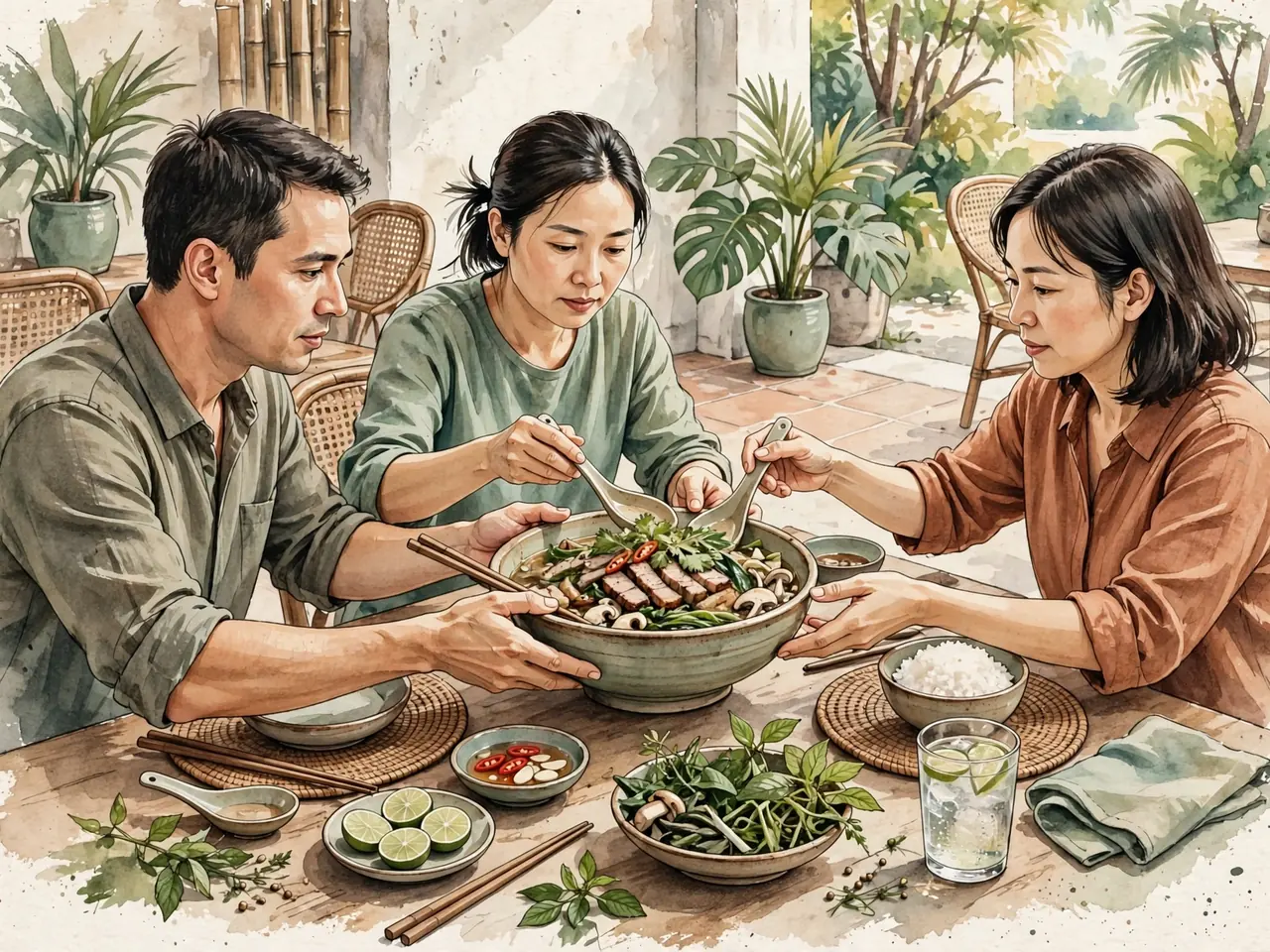
When serving from a shared dish, use the serving spoon or chopsticks if one is provided. If there is no separate utensil, look at what others do; a host may have a preferred way of sharing food.
Keep chopsticks steady and avoid waving them over dishes. Do not stick them upright in a bowl of rice, since that can carry an uncomfortable funeral association for some people. At a restaurant, follow the staff and table setup rather than creating a ceremony around every movement.
A short request lets you participate without reaching across the table or guessing what is being served.
You Món này là món gì vậy ạ? What dish is this? (polite)
Host Đây là canh chua. Bạn ăn thử nhé. This is sour soup. Try some.
You Dạ, cảm ơn bạn. Ngon quá! Thank you. It’s delicious!
A specific, sincere reaction is more useful than forcing yourself to finish something you cannot eat.
Ngon quá!
Approx. pronunciation: ngon kwah
So delicious!
Mình ăn no rồi, cảm ơn bạn.
Approx. pronunciation: min an naw roy gahm uhn ban
I’m full now, thank you.
Mình không ăn được món này.
Approx. pronunciation: min khom an duoc mon nay
I cannot eat this dish.
Gratitude, clear boundaries, and a willingness to try are enough.
If you have an allergy, dietary restriction, or dislike, explain it early and plainly. You can appreciate the invitation without pretending every ingredient is safe or every flavor suits you.
When a meal ends, offer a practical thank-you: “Cảm ơn mọi người, bữa ăn ngon lắm” means Thank you, everyone; the meal was delicious. Whether you help clear dishes or simply stay in conversation depends on the household, so offer and follow the response.