Chúc mừng năm mới!
Approx. pronunciation: chook mung nam moy
Happy New Year!
Welcome the new year thoughtfully.
Find useful language for Lunar New Year conversations while respecting the variety of families and communities.
Learn Tết phrases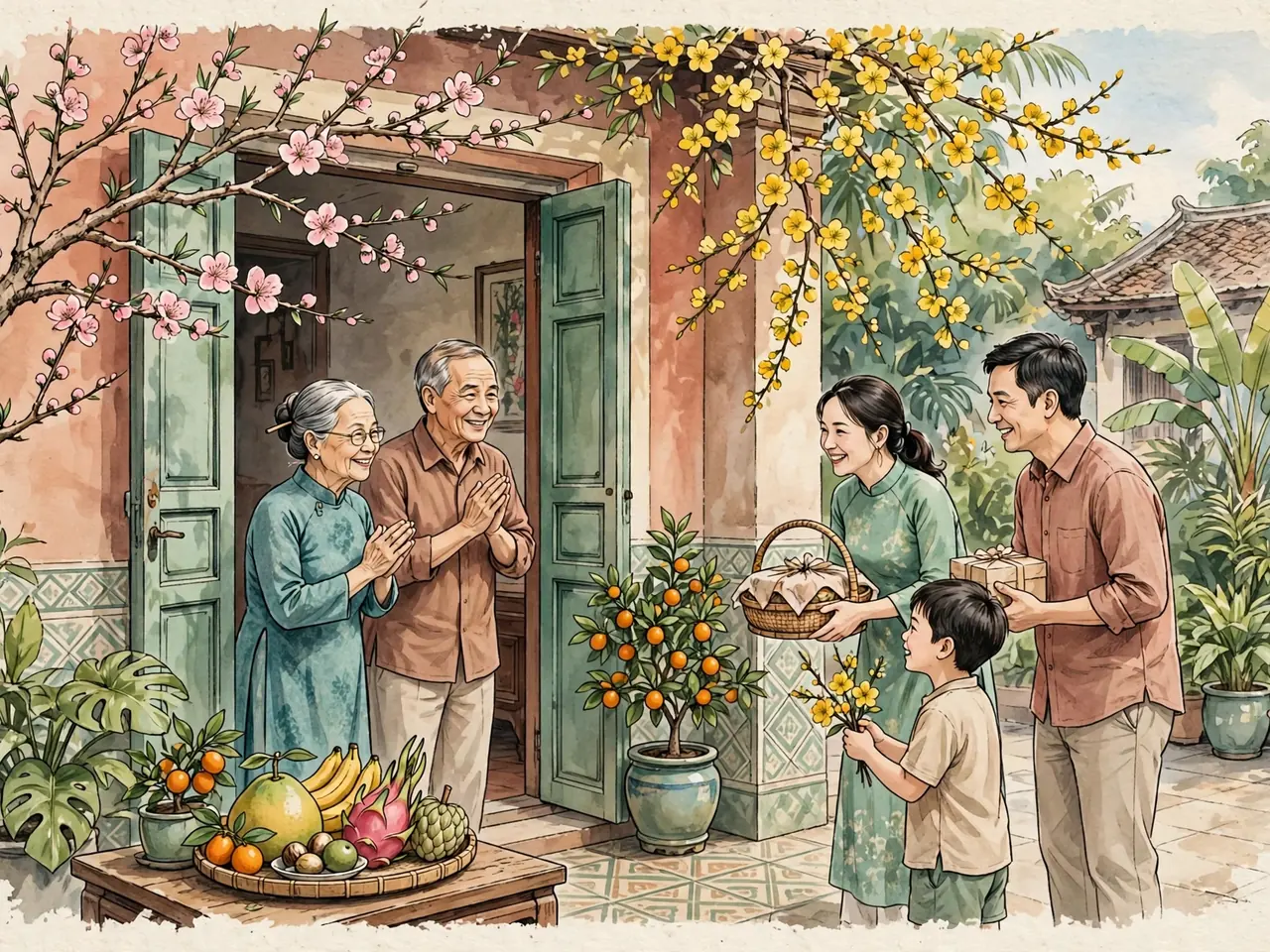
Tết Nguyên Đán is the Vietnamese Lunar New Year, so its dates move each year rather than staying fixed on the Western calendar.
For many people, Tết is a time for rest, reunions, visits, food, and hopes for the year ahead. The length, travel plans, religious practices, and level of celebration differ between families and regions.
A helpful greeting does not require you to explain all of Tết. Start with warmth, ask what the other person is doing, and let them describe which parts matter in their home.
These expressions work in many friendly settings, with the longer wishes sounding more ceremonial or personal.
Chúc mừng năm mới!
Approx. pronunciation: chook mung nam moy
Happy New Year!
Năm mới nhiều sức khỏe nhé!
Approx. pronunciation: nam moy nyew suck kwe nyeh
Wishing you good health in the new year!
Vạn sự như ý.
Approx. pronunciation: van soo nyuh ee
May everything go as you wish. (set phrase)
A Tết home visit can be intimate, busy, formal, or wonderfully casual.
If someone invites you to their home, ask about a convenient time and whether there is anything useful to bring. Some families welcome gifts, fruit, or sweets; others prefer a simple visit or have their own traditions.
Red envelopes, or “lì xì”, are associated with good wishes in many Tết settings, but who gives or receives them and how the practice works can differ. Do not treat an envelope as an automatic entitlement or comment on its amount.
This short exchange keeps the focus on good wishes and lets the host set the tone for the visit.
You Chúc mừng năm mới ạ. Cháu chúc cô chú nhiều sức khỏe. Happy New Year. I wish you good health. (respectful family-style address)
Host Cảm ơn cháu. Mời cháu vào nhà. Thank you. Come in.
You Dạ, cháu cảm ơn cô chú. Thank you.
Stories about what is lucky, appropriate, or avoided may be meaningful without being universal.
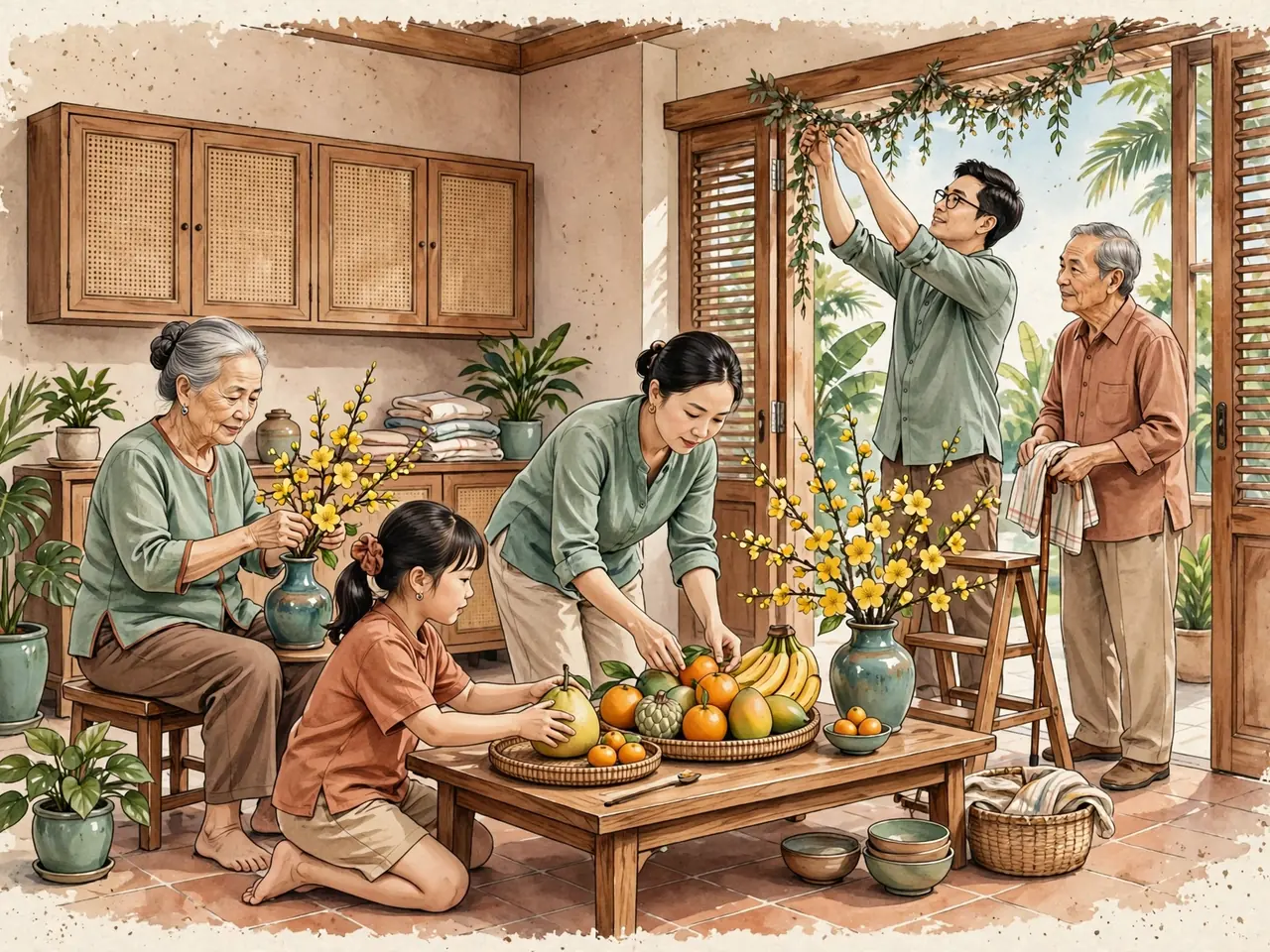
Some households pay close attention to the first visitor, certain foods, cleaning, clothing colors, or words used during Tết. Other households treat these ideas lightly, reinterpret them, or do not observe them at all.
Before bringing up a supposed taboo, ask an open question: “Gia đình mình có kiêng gì trong dịp Tết không ạ?” — Does your family avoid anything during Tết? This shows interest without declaring that one belief applies to everyone.
Practical kindness often lands better than a memorised speech.
Nhà mình có cần con phụ gì không ạ?
Approx. pronunciation: nya min kaw gun kon foo zee khom ah
Is there anything I can help with? (polite)
Tết này bạn có về quê không?
Approx. pronunciation: tet nay ban kaw vay kwe khom
Are you going back to your hometown this Tết?
Chúc bạn một năm mới vui vẻ!
Approx. pronunciation: chook ban mot nam moy voo-ee veh
Wishing you a happy new year!